
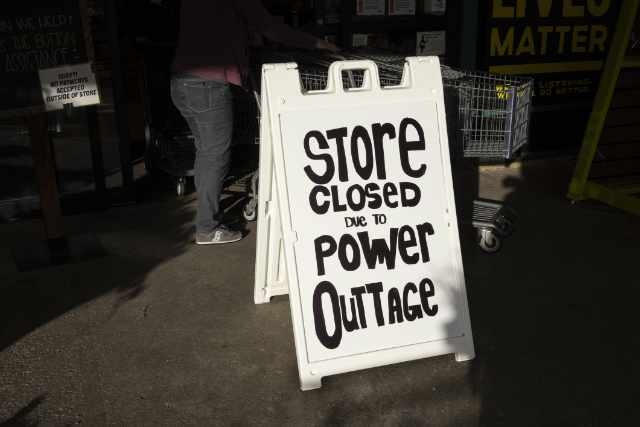
You can almost feel your heart stop when your walk in cooler fails. Whether your unit’s alarms let you know immediately or your first sign is a change in temperature, the clock starts ticking on how long your product will stay viable, with each passing minute increasing the risk of spoilage. Making the right decisions quickly can make the difference between a close call and a catastrophic loss.
The right walk in cooler rental can help you protect inventory and keep operations moving while your permanent unit is repaired. But according to Brandon Mitchell, Sales Manager at Polar Leasing, how fast you can get the unit up and running depends on more than equipment availability. It also depends on how quickly you can provide the right information, approve the rental, prepare the site, and get it connected to power.
Need a walk in fast?
Call us now at (877) 260-7903
Here’s what to do in the first hours after a cooler failure.
1. Keep the cooler door closed
The first step is simple: keep the failed cooler closed as much as possible.
Even if the refrigeration system is not working properly, the insulated box can still help retain cold air for a period of time. Open the door as little as possible to avoid letting warm air in and speeding up temperature loss.
Avoid having multiple staff members opening the cooler to inspect product or move items unnecessarily. Instead, assign one person to monitor the situation, check the temperature, and coordinate next steps.
That person should also document the failure as it progresses. Have them take photos of the cooler, thermometer readings, any visible equipment issues, and affected product. They should also keep a simple temperature log with the time of each reading. This documentation may be helpful later for internal review, food-safety reporting, a health inspection, or an insurance claim.
If your facility uses temperature monitoring, treat a high-temperature alert as an immediate action item. If not, check the cooler thermometer and begin documenting temperature readings.
As a general food-safety reference point, FDA and USDA guidance commonly identify the “danger zone” as 40°F to 140°F, where bacteria can grow more rapidly. Perishable foods should generally not remain in that range for more than two hours, or one hour when surrounding temperatures are above 90°F. Always follow your organization’s food safety procedures and any applicable regulatory requirements for determining whether product can be safely held or moved, or if it should be discarded.
2. Contact repair and rental providers
Mitchell recommends calling a repair technician first. A qualified tech can determine whether the unit can be fixed quickly or will require a longer repair. If you are waiting on parts or face other delays, contact a mobile cooler rental provider right away. Your repair timeline will help you estimate how long you’ll need temporary cold storage.
3. Have your information ready
You don’t need to know every technical detail before calling to rent a walk in cooler. Mitchell says the most important questions are simple: When do you need the cooler, and how much refrigerated storage do you need? From there, your rental provider can help determine the right unit size, delivery plan, and site requirements.
| Information to have ready | Why you need it |
| Receiving availability | To schedule delivery |
| Approximate cooler size | To determine what rental size/number of units needed |
| Product/storage needs | To schedule the right type of unit |
| Site address | To plan delivery |
| Placement location | To determine necessary delivery equipment |
| Site access details | To allow entry through gates, docks, security, etc. |
| On-site contact | To direct placement |
| Power availability | To determine placement and connection requirements |
If you do not know the exact dimensions of your failed cooler, your Polar Leasing rep can help determine which size you need or whether renting multiple units would make more sense.
In an emergency, it is generally better to have more refrigerated space than to overpack a unit. Overpacking can restrict airflow, making it harder to keep product at consistent temperatures.
4. Determine realistic lead times
Under ideal conditions, emergency delivery may be possible on the same day, or even within a few hours. The timeline for your situation will depend on availability, distance, delivery scheduling, site readiness, and how quickly your organization can approve the rental and authorize payment.
| Factors that can speed up delivery times: |
| Delivery drivers are available. |
| Your placement area is ready. |
| Your site has the required power available. |
| An electrician is available to make the connection. |
| Your decision-maker can give quick approval and make payment. |
| Your site is in a populated area. |
Mitchell identifies internal approval as one of the most common causes of delay. The rental provider may be ready to act, but if the person on site cannot sign the agreement, authorize payment, or get the rental approved, the process can stall at the worst possible time.
Remote locations can also add time, especially if the site is several hundred miles from the nearest depot. Weekend timing may also affect delivery. After-hours calls can be received, but emergency deliveries are typically coordinated during regular operating hours unless special arrangements have been made in advance.
5. Confirm power before the unit arrives
A rental cooler can only protect product when it’s connected and operating. Polar Leasing walk in cooler rentals require a 208-230V, 30-amp, single-phase electrical connection. If that power is not available near the placement location, you will need an electrician or generator to make the unit operational.
| Unit size | Generator requirement |
| 8′ x 10′ cooler | 8,500-watt generator |
| 8′ x 20′ cooler | 12,000-watt generator |
Mitchell recommends thinking beyond the rental equipment itself when coordinating emergency cold storage. You should also know what power is available and who can connect the unit when it arrives. Your rental cooler can’t protect your product until it is connected and ready to go.
6. Prepare the placement area
The best placement area is firm, level, accessible, and reasonably close to a power source. Your mobile cooler rental can often be placed on concrete, gravel, grass, or another stable surface as long as the area is firm and level. If the surface is not level, you may need to shim the unit to allow it to properly drain condensation, so the unit can operate correctly.
Polar Leasing units have forklift slots, which can help with placement in tighter areas where a truck cannot position the unit directly. This also allows coolers to be placed indoors or under a canopy if there is enough room above the unit for proper ventilation. If a forklift will be needed, you should discuss this with your rep when arranging delivery.
It’s helpful if you can provide a site map with the delivery entrance, placement location, access roads, gates, and any special instructions. If a site map is unavailable, having someone on site to direct the driver is also acceptable.
7. Account for pull-down time
Once the rental cooler is delivered and connected to power, it will typically need about two to three hours to pull down to operating temperature.
In an emergency, waiting for optimum temperature is not always possible. If product is already at risk, transferring it to an operating unit may be a better choice than waiting, even though this will increase the time it takes for the unit to reach your desired temperature.
| Do: | Don’t: |
| Keep doors closed during pull-down. | Repeatedly open the door to check progress. |
| Use a thermometer to confirm temperature. | Rely on touch alone. |
| Maintain airflow around product. | Overpack the unit. |
| Assign limited staff access. | Allow unnecessary employee access. |
8. Plan before the next failure
According to Mitchell, the fastest and smoothest emergency rentals are usually the ones that were planned in advance. If your business depends on refrigerated storage, it’s a good idea to put an emergency rental plan in place before a failure happens to give your product the best chance of making it through with minimal loss.
A good emergency rental plan includes determining what size rental you would need, researching rental companies, making contact with sales reps, and reviewing their terms and conditions. You can then make an account, get pre-approval from your company for payment, and identify potential cooler placement locations.
This is especially helpful for organizations with complex procedures that require corporate approvals, legal review, or payment processes that can cause delays. Without pre-approval, the person on site may not have authority to sign a contract or issue payment in an emergency.
Handling those details ahead of time can prevent delays when product is at risk and every minute counts.
| What to include in your plan | Why it’s necessary |
| Who can approve a rental | Prevents contract delays |
| How payment will be made | Avoids payment-related holdups |
| Where the unit will be placed | Simplifies delivery and placement |
| How power will be provided | Needed for operation |
| Who will connect the unit | Streamlines the process after delivery |
| Who calls the provider | Keeps response organized |
FAQs about emergency walk in cooler rentals
How fast can I get an emergency cooler rental delivered?
Under ideal conditions, you can take delivery of your mobile rental cooler on the same day you order it. Other emergency rentals may be delivered the next day or within two days, depending on availability, location, site readiness, and your organization’s approval timing.
What should I do first when my walk in cooler fails?
Minimize door openings, check the temperature, and contact a repair provider. If the repair may not be immediate, contact a reputable provider to rent a walk in cooler to protect your product.
What power does a mobile rental cooler need?
Polar Leasing walk in cooler rentals require a 208-230V, 30-amp, single-phase connection. A generator may be used if the proper electrical service is not available.
Can a mobile cooler rental be placed outside?
Yes. The unit can be placed outdoors on a firm, level surface with enough access for delivery and enough space for ventilation.
How long does a walk in cooler rental take to get cold?
A rental cooler commonly takes about two to three hours to pull down after it is connected to power. Door openings, outdoor heat, and loading conditions can affect that timing.
Need to rent a walk in cooler fast?
With the largest electric-powered refrigeration fleet in North America, Polar Leasing has the emergency walk in cooler rental you need, ready to ship from one of hundreds of depots located throughout the United States. These ultra-efficient units arrive ready to go with just a simple electrical connection.