
When there’s a failure at a large-scale catering event, it’s rarely on the service line. Failures at this scale typically occur during a “perfect storm” of logistics missteps that occur under pressure. When service windows compress, deliveries arrive out of sequence, or staging space disappears, cold storage is the system that determines whether your kitchen keeps performing like a well-oiled machine or begins the descent into chaos.
This is especially clear at global competitions like the FIFA World Cup, where tens of thousands of guests line up for safe, efficient service during multiple windows each match. Stadiums like AT&T Stadium in Arlington, Texas seat over 100,000 fans, greatly amplifying the effects of inefficiencies. These same operational pressures also apply to other large gatherings across the United States, such as stadium events, major conventions, festivals, and corporate functions.
The 2026 FIFA World Cup will be played across 16 host cities in the United States, Canada, and Mexico, including major U.S. venues in cities like Dallas, Los Angeles, and New York. Each location will host multiple matches and large fan gatherings over the course of several weeks, creating repeated demand for high-volume catering that depends on reliable cold storage and portable refrigeration infrastructure.
At a certain point, which is often well below 10,000 guests, menu complexity, venue limitations, or anticipated turnout will push cold storage demand above what your venue’s built-in refrigeration can handle. That’s when portable cold storage becomes essential. Above that point, variables stack quickly: more suppliers, more delivery windows, more service zones, and higher risk if there’s a failure at any point in the cold chain.
The difference between smooth service and operational bottlenecks often comes down to how well your team can anticipate capacity needs, coordinate logistics, and integrate portable refrigeration for events into the overall foodservice workflow.
Planning cold storage at scale: a practical framework
It’s not enough to just have extra walk in cooler and freezer units on standby. You need to also calculate how they will fit into your workflow. This includes how many you need, where they should go, and how your ingredients or products will flow through them under pressure. We’ll walk you through how to do this in 7 steps.
1. Define the event profile
Effective cold storage planning for events begins with understanding the operational profile of the event itself.
Key factors include:
- Guest count. While any large event requires additional storage space, there’s a big difference between planning for 10,000 guests and 100,000.
- Service style. A plated dinner service has very different refrigeration requirements than stadium concessions or buffet-style catering, and additional considerations apply when planning multiple styles within the same venue.
- Menu complexity. The more complex the menu, the higher variety of ingredients that require storage.
- Number of service windows. If hosting multi-window and/or multi-day events, you will need to account for how much inventory you will have on hand at event onset and how much you plan to restock during the event duration.
- Temperature requirements. Some menus rely on refrigerated storage for fresh ingredients and prepared items, while others require frozen storage for bulk products.
Events like the FIFA World Cup also require planning for scale across multiple venues. With matches scheduled in 16 different host cities and fan events taking place in surrounding areas, caterers may need to coordinate cold storage for events across several locations while simultaneously maintaining consistent food safety and service standards.
By clearly defining all of these variables early in the planning process, your team can begin using your menu and service plans to create an efficient cold storage strategy for events.
2. Map your cold chain zones
Successful operations create a series of cold storage zones to support different stages of foodservice operations.
Typical cold chain zones include:
- Receiving and quality assurance, where incoming deliveries are inspected and staged.
- Prep staging areas, where temperature-sensitive ingredients are safely held near production kitchens.
- Cold holding areas, where prepared items are stored before service begins.
- Service replenishment storage that supports concession stands and buffet lines.
- Overflow storage for backup inventory.
During a World Cup match in a large stadium such as those in Dallas or Los Angeles, for example, separate refrigeration zones can be designated to support stadium concessions, VIP hospitality suites, media catering, and nearby fan festival areas. Each zone may benefit from dedicated portable refrigeration to keep its ingredients, beverages, and prepared foods at safe temperatures throughout the event.
Creating these zones paves the way for an efficient workflow and helps teams plan where portable refrigeration for events could be best placed to maintain safe temperatures throughout the process. Without planning, kitchens often default to a single overloaded storage area, which creates bottlenecks during peak service periods.
3. Determine how much cold storage for events you’ll need based on food volume
Now that you’ve established the operational flow, let’s take a look at how much refrigeration capacity you’ll need for the amount of food you expect to move.
A common planning mistake is estimating your storage needs based solely on your anticipated average inventory levels. But averages soften essential data showing highs and lows and don’t reflect how event foodservice really works.
Kitchens prepare ahead, which means that demand for cold storage typically peaks before service begins. This is the window when all stages of food preparation exist at once: deliveries arrive, ingredients are staged near prep areas, finished items are held for service, and backup inventory is stored to handle unexpected demand.
If you don’t have enough cold storage capacity to handle demand during this peak window, your teams will end up having to juggle products, adding to labor demands, increasing the risk of misplaced inventory, and creating unnecessary food safety risks.
Experienced caterers often plan approximately 1 to 1.5 cubic feet of refrigerated storage per guest at peak demand. This wide range helps account for differences in menu complexity and service style. A 10,000-person event with a diverse menu might require 10,000 to 15,000 cubic feet of total refrigerated capacity across all cold chain zones.
The complexity of your menu also affects your storage requirements. Events with diverse menus and premium offerings often require more staging space and separate storage zones to provide efficient organization and temperature control, which is why scalable solutions like walk in cooler rental and walk in freezer rental units that can expand storage capacity quickly as guest counts grow are so popular with large catering companies.
Finally, it’s important to plan for unexpected contingencies, such as weather delays, supply disruptions, or last-minute changes in guest count. Building in a 15% to 20% buffer beyond your projected peak demand will give you a good starting point for most needs.
At global sporting events like the World Cup, capacity planning should also account for the tournament’s multi-week schedule. Because matches are played over multiple weeks, catering teams may require walk in cooler rentals and walk in freezer rentals for longer durations, with flexible rental terms that can support repeated service windows throughout the tournament.
4.Compare cold storage options for events
Many venues have refrigeration infrastructure built in, but it’s rarely enough for events serving tens of thousands of guests. Because of this, catering teams usually rely on a mix of temporary refrigeration and cold storage solutions for large-scale food service events.
For tournaments like the World Cup, where venues host multiple matches and large crowds over an extended period, scalable refrigeration solutions allow catering teams to expand storage capacity quickly without relying solely on permanent venue infrastructure.
While multiple solutions exist, the most effective strategy usually combines bulk storage with refrigeration that is easy for staff to access during food prep and service.
The most common options include:
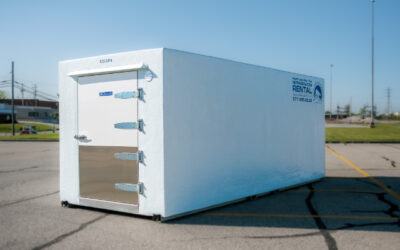
- Walk in cooler and freezer rentals. Temporary walk in cooler rental and walk in freezer rental units are among the most flexible forms of portable refrigeration for events. These quiet units provide easy staff access, maintain consistent temperatures, and can be placed close to kitchens, concessions, or service staging areas. Because staff can enter the unit and organize product on shelving, they function much like permanent walk-in refrigeration found in commercial kitchens.Most rental walk-in units are available in a range of footprints, from approximately 8’×10′ up to 12’×20′ or larger, allowing catering teams to scale refrigeration capacity depending on the event size and menu requirements. Power requirements typically range from standard 208–230V electrical connections for smaller units to higher-capacity connections for larger installations.Lead times for large events can vary depending on season and demand, but it’s a good idea to reserve walk-in cooler and freezer rentals several weeks to a few months in advance to ensure availability and allow time for site planning and delivery coordination.These sporting event walk in coolers for rent can be used in a variety of zones, supplementing venue refrigeration and supporting beverage storage, ingredient staging, and prepared food holding during service.
For example, large stadium events such as World Cup matches often deploy multiple walk-in cooler rentals near concessions and hospitality kitchens to support beverage storage, ingredient staging, and prepared food holding during peak service periods.
- Refrigerated trailers. Also known as reefer trucks, these trailers are easily moved and can store large quantities of product for backup. These units are ideal for storing large quantities of product in bulk or staged apart from primary foodservice areas. Some events use refrigerated trailers for backup inventory storage or off-site staging for product delivery to on-site kitchens.
But they can be less convenient for use in active customer-adjacent environments due to the noise, odor, and maintenance requirements of their diesel engines. Their elevated platforms and cargo doors also make them more challenging to access frequently during prep and service.
For this reason, many teams use refrigerated trailers primarily for bulk storage while using walk-in cooler rentals closer to kitchens and service areas for frequent access.
- Off-site cold storage. In some cases, off-site facilities may support bulk inventory storage before the event, with scheduled deliveries made throughout the service window. This approach is sometimes used when venue space is limited or when product deliveries need to be staged well in advance of the event. But it requires careful coordination to ensure inventory arrives on-site at the correct time and in the correct quantities.
When planning refrigeration for large-scale catering operations or sporting events, decision-makers evaluate solutions based on how they best solve their specific challenges. The table below highlights how the most common cold storage options compare.