What would happen if a refrigeration alarm in your facility were to go off? Would your staff calmly follow a defined emergency protocol? Or would the alarm start a scramble to find a repair tech and rental provider? Who would approve the expense? And does anyone know if your building has the right electrical connection for a rental cooler?
If you don’t have protocols in place for emergency situations, you’re putting your expensive perishables at unnecessary risk. Even if some of your sites have a plan in place, inconsistent procedures between locations can cause you to lose critical time while a site waits for corporate approval.A walk in cooler rental plan closes that gap. It gives facility managers, franchise owners, and procurement leaders a well-defined procedure to move from equipment failure to temporary refrigeration without making every decision under pressure.
As Brandon Mitchell, Sales Manager at Polar Leasing, put it: “You’ll get the best results if you’re proactive and have an emergency plan in place before an emergency happens.”
Walk in cooler already failing?
Check out our guide to what to do in the first hours after a cooler failure.
Why your emergency walk in cooler rental response starts before a failure
When a failure strikes, your first call should be to a competent repair professional. If the problem remains uncertain or repairs can’t be completed within your organization’s acceptable window, it’s time to put your temporary cold storage plan into action. This may mean transferring product to another location or contacting a mobile cooler rental provider to bring a temporary unit on site.
Mitchell says customer-side approval processes are among the most common causes of rental delays. Some organizations have to scramble up the chain of command to find a regional vice president, legal reviewer, or purchasing manager with the power to approve an emergency rental after a failure occurs, adding delays while inventory remains at risk.
Establishing vendor relationships, opening accounts and completing contract and payment approvals before a failure occurs can make the emergency response far more seamless.
Emergency Plan Takeaway
Decide who can authorize a rental, approve payment and accept delivery before an alarm goes off.
Build your walk in cooler rental protocol around five response stages
Your SOP doesn’t need to predict every possible failure. Instead, it should assign ownership at every stage and establish the order of operations.
| Stage | Phase | Required Action | Primary Owner |
|---|---|---|---|
| 1 | Evaluate | Keep the door closed, record temperatures, contact a service rep, and estimate repair time. | Site Manager/facilities |
| 2 | Activate | Contact your approved mobile cooler rental provider to start the process. | Facilities/operations |
| 3 | Approve | Use preapproved contract terms, payment methods, and spending authority. | Procurement/finance |
| 4 | Prepare | Prepare the placement area, confirm access, and identify your onsite contact. | Site Management |
| 5 | Connect | Connect electricity, verify required temperature, and transfer inventory. | Facilities / quality lead |
Record the start time of each stage. Afterward, this framework can help you pinpoint any delays that occurred, so you can improve your protocol for the next incident.
Prepare your information before an emergency
Create a rental-readiness sheet for every location and store it with each facility’s emergency procedures.
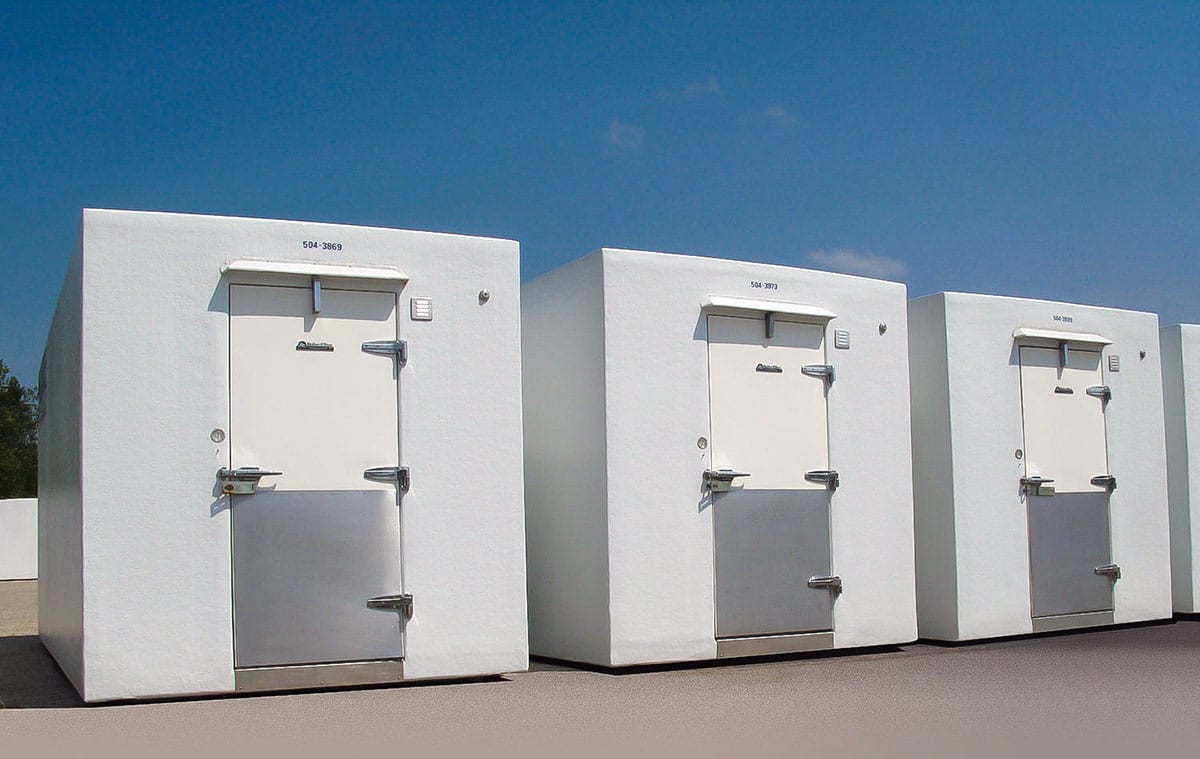
- Cold-storage capacity: Record your permanent cooler’s dimensions and typical inventory volume to simplify ordering the correct rental size. Polar Leasing’s most common rental models are 8 feet by 10 feet and 8 feet by 20 feet, and multiple units can be used when needed.
- Electrical specs: Polar Leasing walk in units generally require a 208- to 230-volt, 30-amp, single-phase connection. Have a qualified electrician install or verify the planned connection point.
- Placement and access: Identify a firm, reasonably level surface. Note gates, curbs, tight turns, overhead obstructions, receiving hours, and security requirements. Document delivery routes and obstacles.
- Delivery instructions: Save a site map with the preferred facility entrance and placement area that can be shared with your delivery driver. Include any notes or access codes needed for entry. Save maps, codes and contact information.
- Positioning resources: Determine whether a truck will be able to reach the placement area or whether a forklift will be needed. Determine whether forklifts are required.
- Local contractors: Identify one or more local electricians who can respond quickly in an emergency to make the required connection. Identify electricians before an emergency.
- Approval details: Document the provider, contract status, payment method, authorized signer, and escalation path, so you’re ready to go when an emergency strikes. Document vendor, payment and escalation contacts.
Use the same forms and protocols across every location, so a central team can coordinate a consistent response.
Review the plan before you need it
Review each location’s emergency plan annually, before busy seasons, and whenever a facility changes its electrical system, receiving area, security process, or management team. Procurement should also confirm that contracts and payment arrangements remain current.
After an incident, evaluate the response for delays. Was the capacity estimate accurate? Was the planned location appropriate? Could the driver reach it? Was an authorized signer available? Did the electrician understand the connection requirements? Revise the plan as needed to avoid the same missteps in the future.
Polar Leasing walk in cooler rentals minimize disruptions
At Polar Leasing, we have the largest fleet of electric refrigerated rental units in North America, with a network of hundreds of distribution depots across the country.
Depending on unit availability, location, scheduling, and site readiness, we may even be able to deliver a walk in cooler rental the same day.
Getting temporary refrigeration onsite quickly is critical, but choosing equipment that supports your day-to-day operations can also make the emergency easier to manage.
When you create an emergency plan in advance, you have the benefit of choosing a walk in cooler that fits your workflow instead of accepting whichever option you can find under pressure. Consider how your employees will enter it, how products will move in and out, and whether noise or exhaust will affect customers, patients, residents, or staff.
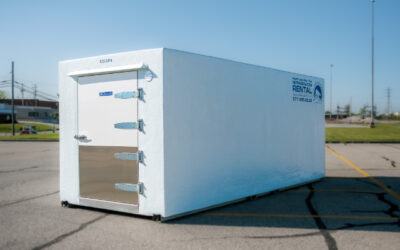
Polar Leasing units rest at ground level, have standard walk in doors, and operate on electric power. Many businesses find these features more convenient than the elevated ramps, cumbersome cargo doors, diesel engine noise, exhaust, and refueling typically associated with refrigerated trailers.
Our energy-efficient units also have brighter interiors than stainless steel units due to their smooth, easy-to-clean fiberglass surfaces. If your mobile cooler rental ends up staying onsite for days or weeks, choosing Polar Leasing to support your routine workflow allows you to maintain business as usual, even during an emergency.
Ready to create your emergency mobile cooler rental plan?
Frequently Asked Questions
Is a walk in cooler rental plan the same as reserving a unit?
No. A walk in cooler rental plan is a contingency plan that prepares your organization to act in an emergency, but it does not guarantee that a specific unit will be available at that time. Contact us to schedule a reservation for planned maintenance, seasonal demand, or a known high-risk period.
What information do we need to have ready on our end?
You’ll need to know your required capacity, electrical service, placement, delivery access, onsite contacts, and approval authority. Those details determine whether the right unit can be authorized, delivered, positioned, and powered without unnecessary delays.
Can a mobile cooler rental be placed indoors?
It may be possible if your building has adequate access, space, and ventilation around and above the unit. Call us to confirm the location before including it in your plan.