Expert source: Joe O’Keefe, Vice President of Operations, Polar King Rentals
Peak season comes like clockwork: that point in your annual or seasonal cycle when demand exceeds your on-site cold storage capacity. If you’re dreading the last-minute scramble to get the additional cold storage you need in place for the rush, there’s a simple solution.
Portable walk in cooler rental units can give you temporary overflow space without the heavy upfront expense of permanent construction or the inconvenience, noise, and fumes of diesel-powered reefer trailers. And by planning the rental ahead of time, you can avoid unnecessary costs and headaches that often come with waiting until the pressure is on.
Peak-season rental planning at a glance
Start planning 60–90 days before peak demand and aim to reserve 30–60 days ahead. Size for usable storage space, not just external dimensions. Verify placement, delivery access and electrical service before the unit arrives.
When to reserve a walk in cooler rental for peak season
Joe O’Keefe, Vice President of Operations at Polar King Rentals, advises customers to start planning 60–90 days before the expected demand spike. That gives your rental provider time to confirm inventory, work through sizing and placement, and coordinate contracts and logistics. He generally recommends locking in the reservation 30–60 days ahead.
O’Keefe highlights one restaurant chain that typically reserves around 35 rental units during the holiday season. The company starts coordinating with Polar King Rentals in July, confirming locations, pricing, freight, and unit needs well before the holiday rush.
“Because they’re early, they can reserve all the units they need. We lock them in, and nobody else can touch them,” O’Keefe says.
That lead time becomes especially important if you need multiple units, specific sizes, or coordinated deliveries across several locations. Although emergency delivery may be possible within 12 to 48 hours, waiting until the last minute can leave you with fewer units, fewer size options, and less flexibility in delivery timing. For predictable seasonal demand, planning weeks rather than days ahead gives you more control over what you get and when it arrives.
| Timing | Step |
|---|---|
| 60–90 days out | Forecast demand, identify locations and begin planning with your rental provider. |
| 30–60 days out | Finalize sizing, placement, logistics and approvals; sign and pay to reserve the units. |
| 2 to 4 weeks out | Prepare the electrical supply, clear the placement area, confirm delivery windows and site contacts. |
| Before pickup | Confirm the units are emptied, cleaned and disconnected, and communicate any extension needs in advance. |
Size your portable cooler rental for usable capacity, not just square footage
Planning how much seasonal overflow capacity you need starts with how much additional product you expect to hold, but the footprint your inventory takes up doesn’t tell the whole story.
When determining how much portable cooler rental space you need, consider:
- Will product arrive on pallets or be hand-loaded?
- How often will employees enter the unit?
- Are you storing large quantities of a few products, or do you need a wide aisle for picking?
- Are you leaving enough room around product for airflow?
- Do all your products need to be stored within the same temperature range, or do you need separate units for different temperatures?
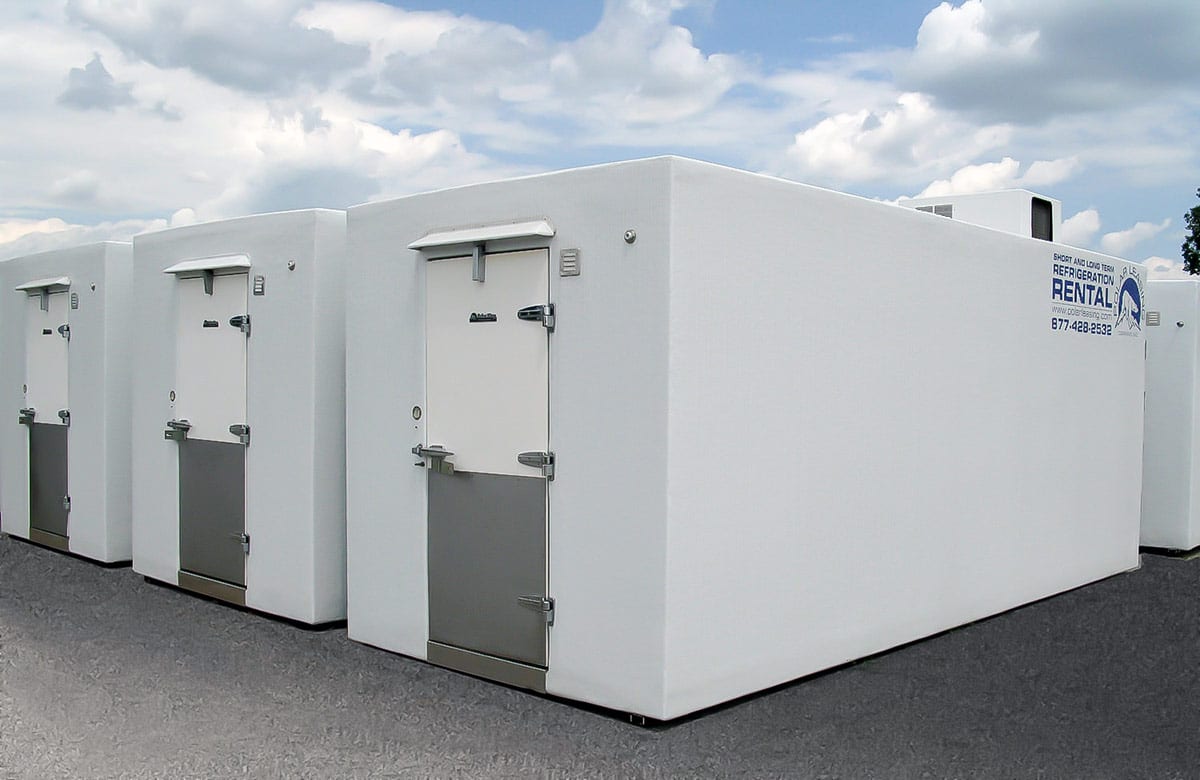
Polar King Rentals offers walk in cooler and freezer rentals in two standard sizes, 8′ x 10′ and 8′ x 20′, with portable refrigerated warehousing available in many markets. O’Keefe notes that an 8′ x 20′ unit can accommodate about eight pallets, but cautions, “This isn’t a cube that you can stuff full.” You still need to allow enough room for airflow and employee access.
For frequently accessed inventory, O’Keefe says a two- to three-foot aisle may be appropriate. If the product is loaded primarily for longer-term storage and accessed infrequently, you may be able to use narrower aisles.
Multiple smaller units can also be useful when you need different temperatures or want cold storage positioned near separate receiving or picking areas. Cooler applications may operate up to 55°F, while walk in freezer rentals are available at 0°F or −10°F, depending on the unit. One large unit gives you one temperature zone; several smaller rentals can provide more operational flexibility.
Where to place a portable walk in cooler rental
A portable walk in cooler rental may physically fit in a parking lot, receiving area, or exterior staging zone, but that doesn’t automatically make it a good location.
O’Keefe puts electrical access first. Polar King Rentals walk in cooler and freezer rentals require 30-amp, 208–230-volt, single-phase electrical service.
Then he advises evaluating whether the surface is level, how delivery equipment will reach the site, employee walking distance, traffic flow, security, lighting, and proximity to the building.
Poor placement can create problems throughout the rental period, O’Keefe cautions. Placing a unit on a significant incline, for example, can cause condensate to overflow the drain pan, leaving pools of water on the cooler floor or ice buildup in a freezer. Typically, fixing the problem requires emptying the unit and moving it to a better location. The unit can be placed on grass, gravel and other outdoor surfaces, but the final placement area must be level for proper operation and condensate drainage.
O’Keefe has also seen sites where the distance from the electrical source created operating problems or where employees had to walk farther than necessary every time they retrieved product. To avoid common issues, keep the planned placement reasonably close to an appropriate electrical source and have a licensed electrician verify the connection before delivery.
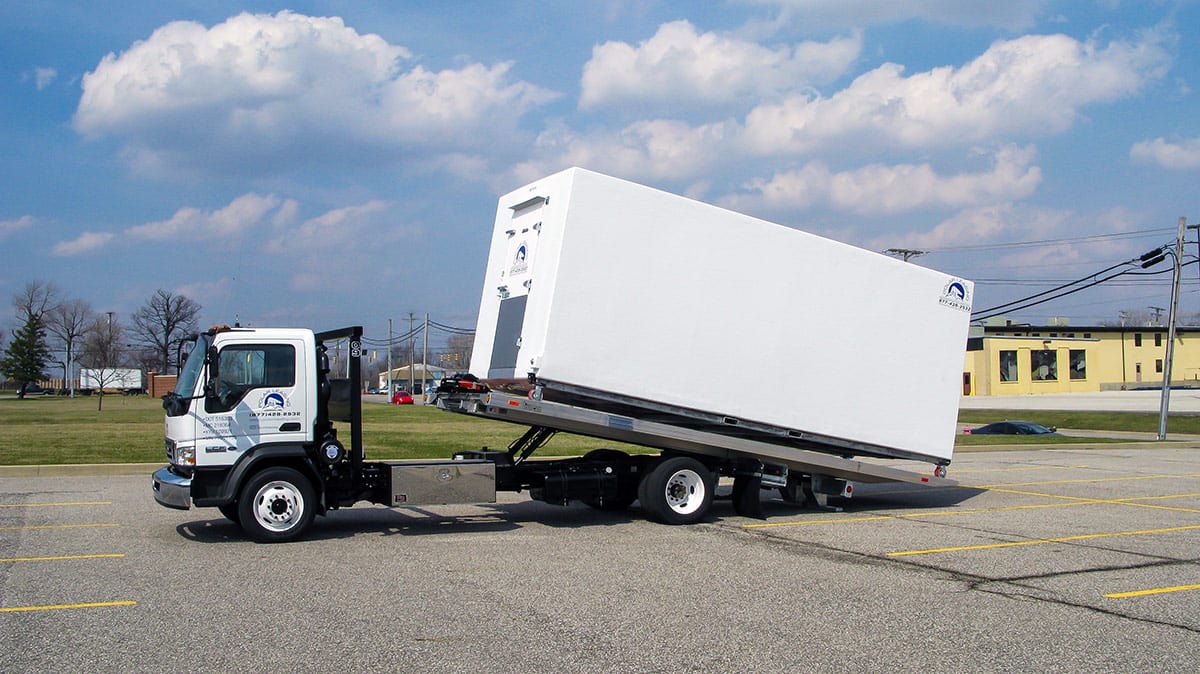
There may also be other challenges that only someone experienced with delivering large units would foresee. For instance, a space may be large enough for the unit itself but still lack the clearance needed to deliver and position it. According to O’Keefe, even a smaller rollback delivery vehicle may need roughly 50 feet of working space to place an 8′ x 10′ unit.
For complex locations, you can send your rental provider an overhead drawing showing access routes, available power, the proposed placement area, and any overhead obstructions so they can help you choose the most suitable location. And because some jurisdictions regulate temporary ground-level structures, you should also be sure to check local permitting requirements during the planning phase.
What to give your rental provider before you reserve
Planning ahead also gives procurement teams an opportunity to eliminate internal delays.
Before you make a reservation, confirm:
- The number and size of units
- Whether each unit will be used as a cooler or freezer
- Delivery and pickup dates for each location
- Site address, on-site contact and receiving hours
- Placement location, delivery access and available electrical service
- Rental term and extension or additional-capacity options
- Purchase-order, approval, payment and vendor-setup requirements
And remember that getting a quote does not mean the equipment has been reserved. “Until someone signs and pays, we can’t really lock down anything,” O’Keefe says.
That distinction matters most when many businesses are preparing for the same holiday, event season, or weather-driven demand spike. Waiting until right before peak season can mean fewer choices of unit sizes, delivery schedules, or locally available equipment.
Build flexibility into an uncertain forecast
You don’t need to rent for the maximum demand scenario on day one. When volume is uncertain, O’Keefe suggests starting with about 85% of projected maximum volume rather than paying freight and delivery costs for capacity you may not need. If demand runs higher than expected, you can increase capacity later. “It’s much easier to add than reduce,” he says.
But be sure to discuss this uncertainty with your rental provider while you’re developing the plan. Ask what additional units are likely to be available, what an extension would cost, and what happens if peak season lasts longer than forecast. That way, both you and your provider will know what to expect when peak season comes.
Coordinate seasonal rentals across multiple locations
Franchise owners and facilities teams overseeing multiple sites can make peak-season rentals easier by planning centrally, rather than location by location.
At Polar King Rentals, we have the largest electric refrigeration rental fleet in North America with hundreds of distribution depots across the country. We standardize pricing for larger accounts, coordinate dispatch through our central office, and in some cases establish consistent freight rates. Customers can also work with the same sales rep across locations rather than starting a new relationship in every market.
That allows procurement teams to use one planning process while units are distributed regionally or locally. It also gives you an opportunity to compare actual seasonal usage by site, so you can refine your capacity plan for the following year.
Plan peak-season cold storage with Polar King Rentals
Polar King Rentals offers quiet, energy-efficient short- and long-term walk in cooler and freezer rentals for seasonal demand and other temporary cold storage needs. Unlike elevated reefer trucks or trailers, our units sit at ground level with easy-open doors, making frequent employee access safer and more convenient. They arrive pre-wired and pre-assembled, and operate on electricity rather than diesel, eliminating the need for fuel storage, refueling, and ongoing fuel management.
We offer rental terms ranging from one week to five years to help meet a wide range of customer needs. If a service issue occurs during your rental, you can call our 24-hour service hotline and we can coordinate with refrigeration service companies throughout North America.
The advantage of planning early with us isn’t just reserving a unit. It’s getting the right capacity, in the right place, on the right schedule, with the approvals and logistics already settled before peak season begins. You’ll have an experienced rep who can help you find the best solution and serve as your single point of contact from your first questions through pickup at the end of your rental term.
Frequently Asked Questions (FAQs)
How far in advance should I reserve a walk in cooler rental for peak season?
Start the planning process about 60–90 days before your seasonal demand spike and aim to lock in the reservation 30–60 days ahead. Earlier planning is especially valuable when you need multiple units or are coordinating several locations.
How do I determine what size portable cooler rental I need?
Estimate the amount and type of product you expect to store, then account for pallets, aisle space, airflow, and how frequently employees will enter the unit. Your Polar King Rentals rep can use that information to recommend the appropriate unit size or combination of units.
Where can a portable walk in cooler rental be placed?
The best location has adequate electrical service, a firm and level surface, enough room for delivery equipment, and safe employee access. Also consider traffic flow, lighting, security, distance from receiving or production areas, and any local permitting requirements.
What information should I give a rental provider before peak season?
Provide your projected capacity needs, cooler or freezer temperatures, preferred delivery and pickup dates, placement location, access information, power availability, and on-site contacts. Sharing these details early helps your provider recommend the correct equipment and plan delivery logistics.
What should I confirm before reserving a walk in cooler rental?
Confirm pricing, freight, rental term, payment, extension options, internal approvals and any purchase-order or vendor-setup requirements. Remember that receiving a quote does not necessarily reserve the equipment. You’ll need to complete the required agreement and payment process to lock in your units.