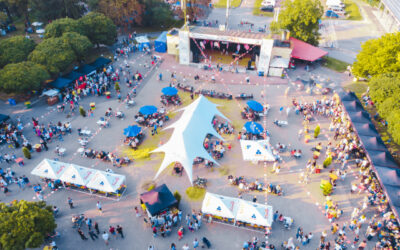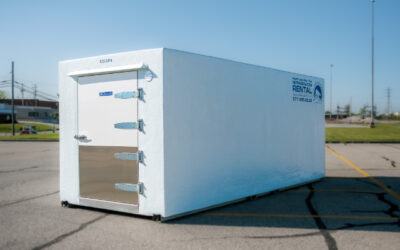
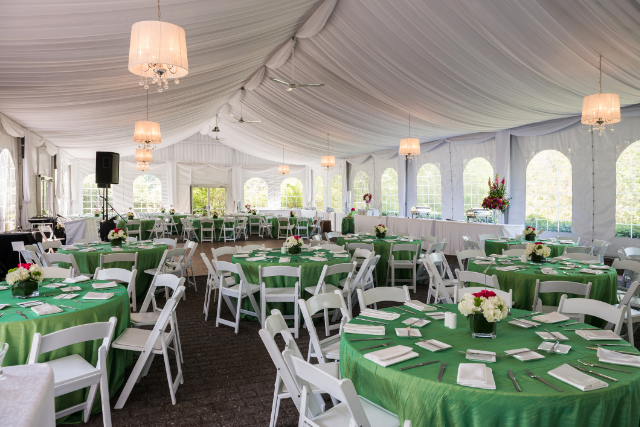
Whether you’re planning cold storage for events like the FIFA World Cup, a PGA tournament, a multi-day music festival, or a large-scale catering operation, you face the same challenge: serving tens of thousands of guests as quickly and efficiently as possible, while making sure food is kept at safe temperatures. This requires more than just adding refrigerated space; it requires a practical portable refrigeration strategy built around capacity, placement, access, and timing.
Fortunately, there’s a way for you to make that easier to manage: make your cold storage plan the cornerstone of your event strategy.
When planning cold storage for events, capacity is one of the first areas to consider. Too much cold storage can increase rental and operating costs, but not having enough can create bottlenecks, cause issues with temperature control, increase food waste, and disrupt service. The goal is to have enough space to work safely and efficiently without paying for more refrigeration than your operation needs.
From storage space to event strategy
Capacity is an important part of a successful event refrigeration plan, but it’s not the only one. Get the 10,000-foot view of cold storage options, placement strategy, rental considerations, and event logistics in our full guide to planning cold storage for large events.
Placement is also a major factor. Even if you have enough capacity, accessing it can still slow the operation down if it’s too far from prep areas, service lines, or replenishment points. Where cold storage is located, how teams use it, and how inventory moves in and out of each unit all affect service speed, food safety, and day-of-event efficiency.
The good news is that successful cold storage planning is less about complicated formulas and more about understanding your products, your operation, and how you’re planning to move your inventory throughout the event.
How to compare cold storage options for events
Some event planning resources suggest estimating cold storage requirements based on attendance, often using guidelines such as one to 1.5 cubic feet of refrigerated storage per guest. This benchmark can be a useful starting point for initial planning, but it’s a demand estimate, not a complete capacity plan. Guest count helps you understand the scale of service. Your products, storage requirements, and operational model determine what kind of cold storage will actually support that demand.
According to Duane Waterman, Senior Account Executive at Polar Leasing, the most accurate capacity estimates come from looking closely at what products are being stored, how they are packaged, and what temperatures they require.
“It depends on the type of product, how it’s being stored, and what temperatures you need for that product,” Waterman explains.
That’s because attendance may tell you how much demand to expect, but your product will tell you what kind of cold storage that demand will require.
Two events serving the same number of guests may need dramatically different refrigeration capacity depending on beverage volume, menu complexity, packaging methods, delivery schedules, and the balance between frozen and refrigerated inventory. A beverage-heavy sporting event, for example, may demand significantly different refrigeration resources than a VIP hospitality operation serving plated meals and specialty desserts.
When estimating cold storage needs, planners should first identify the products requiring refrigeration or freezing, determine approximate inventory volumes, understand temperature requirements, and map how products will move through the operation from receiving to service. This operational view will often produce a far more accurate estimate than guest-count formulas alone.
| Capacity variable | Planning impact |
|---|---|
| Attendance volume | Establishes demand |
| Beverage requirements | May increase cooler space |
| Frozen inventory | Requires freezer capacity |
| Menu complexity | Increases storage demand |
| Service locations | May require distributed units |
| Replenishment schedule | Affects on-site inventory volume |
| Event duration | Increases need for flexibility |
| Packaging and palletization | Affects usable storage space |
Capacity takeaway: Guest count helps estimate demand, but product mix, temperature requirements, packaging, and replenishment schedules determine how much cold storage a large event really needs.
The difference between usable capacity and total capacity
You might assume that cold storage planning is simply a matter of fitting inventory inside a walk in cooler or freezer, but usable capacity is also affected by airflow, accessibility, and operational workflow. Even when a unit has enough square footage, it may still be too full to cool products evenly, too crowded for staff to move efficiently, or too poorly organized to support fast replenishment during peak service.
Access also matters. For example, palletized inventory may require a larger door opening, while staff-accessed inventory may require more interior space for safe movement and frequent retrieval. That is why capacity planning should consider not only how much product must be stored, but also how that product will be delivered, loaded, accessed, and replenished throughout the event.
Thinking in pallets: a simpler way to estimate capacity
For large events, it’s often easier to think in terms of pallets and workflow rather than cubic footage.
Waterman says this kind of visual reference often helps customers make sense of the available space. “If you open the box and can visualize four standard pallets on the floor, two by two, that gives them a visual of how much space they have,” he says. “For our larger units, you can visualize eight pallets.”
A visual approach helps teams understand not only how much product will fit inside a unit, but also whether staff will be able to efficiently access inventory during service.
| Unit size | ~Usable floor space | Pallet capacity |
|---|---|---|
| 8’x10′ | 67 sq. ft. | ~4 pallets |
| 8’x20′ | 140 sq. ft. | ~8 pallets |
| 8’x20′ w/54″ door | 140 sq. ft. | ~8 pallets |
Polar Leasing offers temporary walk in cooler rentals and walk in freezer rentals in multiple unit sizes, with spec sheets available to help planners compare available space, door configuration, and workflow needs.
The most common cold storage mistake: overpacking
Because savvy planners are always looking for areas where they can save money, it may seem like a good idea to use every last inch of available refrigeration space. But overpacking a walk in cooler or freezer reduces the efficiency of the unit and can create serious food safety risks.
“They think they can squeeze everything into the box,” Waterman says. “But they don’t accommodate for the proper airflow needed to maintain that internal temperature.”
Walk in coolers and freezers work best when they can circulate cold air throughout the unit to maintain consistent internal temperatures and avoid hot spots. But this only works when there is enough space for air to move freely.
Packing inventory too tightly restricts airflow and forces cooling systems to work harder. The restricted airflow also increases the time it takes to get back down to safe temperatures after door openings, which can raise the risk of food spoilage, particularly during high-traffic events where doors are opened frequently.
To help ensure food is kept at safe temperatures, allow enough room for the air to move. Leave space on the sides and at the top of the walk in, and avoid creating solid walls of product without any visible air gaps. If you can’t see spaces where the air can circulate, the unit is likely overloaded.
Practical rule: If products are packed wall-to-wall or floor-to-ceiling with no visible air gaps, the walk in cooler or freezer is overloaded.
When an estimate is close, it is often safer to build in additional space rather than trying to make a smaller unit work. That added space supports airflow, product access, and faster replenishment during peak service periods.
Planning for multiple storage types
Many items can be stored together as long as they share the same safe holding temperature and can be organized without restricting access or airflow. But not all products can be stored in the same environment.
Large events often require multiple temperature-controlled zones to support different stages of operation, different product categories, and different service locations.
Frozen foods, refrigerated ingredients, prepared meals, beverages, and specialty products may all have unique storage requirements. Some products, such as certain chocolates or specialty foods, may even have a narrow temperature range that justifies dedicated cold storage.
Food safety temperature baselines
Cold storage capacity should be planned around temperature requirements, not just available space. The FDA Food Code uses 41°F or below as the standard for foods that require time and temperature control for safety. USDA guidance identifies 0°F or below as the standard freezer temperature. Those benchmarks can help determine which products need walk in cooler space, which require walk in freezer capacity, and which may need dedicated storage.
This is why many large event planners rely on portable refrigeration for events, using a combination of walk in coolers and walk in freezers positioned strategically throughout the venue. Rather than concentrating all products in one location, they create storage zones that support receiving, preparation, service, replenishment, and overflow inventory.
| Reference chart: Cold storage zones for large-scale events | |
|---|---|
| Zone | Purpose |
| Receiving & quality assurance | Inspecting and staging incoming deliveries |
| Prep staging | Holding ingredients near kitchens |
| Cold holding | Storing prepared foods before service |
| Replenishment storage | Supporting concession stands and service lines |
| Overflow storage | Holding backup inventory and reserve stock |
This approach positions products closer to the teams that need them, reducing walking time for staff and helping support faster service during peak periods.
Cold storage planning for World Cup-scale events
Refrigeration for sporting events becomes more complex at the scale of the FIFA World Cup, race weekends, golf championships, and other high-volume events where foodservice operations need to support large crowds over an extended period of time. The 2026 FIFA World Cup, with 104 matches across 16 host cities in the United States, Canada, and Mexico, is a timely example of the kind of large-scale, multi-venue event where distributed cold storage planning becomes essential. Similar planning challenges also apply to multi-day festivals, large convention catering programs, and other high-volume events with multiple service windows, vendors, and storage locations.
At this scale, cold storage planning has to go beyond estimating how much refrigerated or frozen inventory needs to be held on site. It also needs to consider how that inventory will be replenished, where products will be staged, how many vendors or service points need access, and whether different areas of the venue will require their own walk in cooler or walk in freezer rentals.
Large, multi-day events also create more variability. Attendance may change from day to day, menus may differ between general concessions and premium hospitality, and demand may spike around specific service windows. A plan that works for a single-day event may not provide enough flexibility for a tournament, festival, or multi-venue operation.
Large, multi-day events also benefit from contingency capacity. When a single walk in cooler or freezer supports an entire service zone, any disruption can affect receiving, prep, replenishment, or service. Building in redundant cold storage or overflow capacity gives operators a practical buffer for unexpected demand spikes, delayed deliveries, product overflow, or equipment issues.
For World Cup-scale events and other high-volume operations, that extra flexibility can be the difference between a manageable adjustment and a service disruption.
Because of these factors, World Cup-scale event refrigeration often requires a combination of temporary walk in cooler rentals, walk in freezer rentals, and strategically distributed cold storage locations to make sure the right type of cold storage is available in the right location for each part of the operation.
Build setup time into the refrigeration plan
A walk in cooler or walk in freezer rental doesn’t arrive on site ready for product. The unit has to be delivered, placed on a firm and accessible surface, connected to the proper power source, and given enough time to pull down to the required temperature before inventory can be loaded.
This timeline matters more at large events because foodservice teams, vendors, contractors, power providers, staging crews, and logistics partners will need to coordinate their deliveries within the same setup window. If cold storage delivery is scheduled too close to product arrival, even a small delay can create problems for receiving, staging, and food safety.
Reserve early, deliver early
For large events, you need to manage two timelines: reservation and delivery. Reserve your walk in cooler or walk in freezer rentals as early as possible to ensure you can secure the right unit sizes, configurations, and delivery window for the dates that you need. Then schedule the date for your units to be delivered. Make sure it’s at least one day before they will be used to allow time for placement, power connection, temperature pull-down, and final checks before inventory arrives.
Building in extra time is even more essential for large events with multiple units or distributed storage locations. A single unit may be relatively simple to place and connect, but multi-unit setups may require additional coordination with freight partners, venue operations, electricians, and on-site managers. The earlier those details are handled, the less pressure there is when product begins arriving.
| Setup stage | Actions |
|---|---|
| Delivery | Schedule within venue delivery windows |
| Placement | Confirm a firm, level surface and adequate access |
| Power connection | Verify available commercial electrical service |
| Temperature pull-down | Build in time for units to reach required temperatures |
| Product loading | Load only after previous stages are complete |
Setup takeaway: For outdoor events and large venues, reserve units early, schedule delivery before product arrives, confirm a firm and accessible placement area, and verify commercial power before loading inventory.
Plan large-event cold storage with Polar Leasing
At Polar Leasing, large-event cold storage planning is one of our most-requested conversations. We start with the specifics of your operation, then work through capacity, placement, unit configuration, delivery timing, and setup logistics so your cold storage is ready before product ever arrives on site.
Our goal is to help you create a reliable cold storage plan that supports operations, protects your products, and avoids costly problems during your event.
That consultative approach matters because the right recommendation is not always the largest unit or the same size unit for every type of product. Depending on the mix of refrigerated and frozen inventory, a large event may need a larger cooler and a smaller freezer, a larger freezer and a smaller cooler, or multiple units distributed throughout the venue.
“We’re not just helping customers,” Waterman explains. “We’re working to build lasting partnerships.”
Want to find out how Polar Leasing can help support cold storage planning for your next large event?