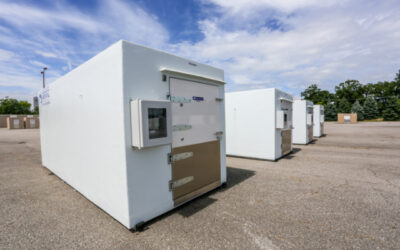

In pharmaceutical operations, cold storage decisions are about more than just compliance. The choices you make have a direct effect on the shelf life and waste of temperature-sensitive products and overall profitability of your operation.
Storing all your Time and Temperature Sensitive Pharmaceutical Products (TTSPPs) onsite in walk in pharmaceutical cold rooms makes sense for small inventories. But as your organization grows, you may start to wonder if it would make sense to move inventory offsite into pharmaceutical cold storage warehousing.
This question is similar to others that pharmaceutical teams routinely face, such as choosing between pharmaceutical walk ins and reach‑in medical freezers, and there is no one‑size‑fits‑all answer. Walk in cold rooms and pharmaceutical cold storage warehouses each serve clear, legitimate purposes. The best solution depends on how much inventory you store, how often you ship, and where your operation is headed in the future.
Let’s break down both cold storage options for pharmaceuticals in straightforward terms, so you can easily see what they do well, what their limitations are, and why many pharmaceutical companies use both to balance their cold chain strategies.
Onsite cold storage in walk in pharmaceutical cold rooms
Walk in pharmaceutical cold rooms, also known as walk in coolers and freezers, are temperature‑controlled spaces installed directly within or adjacent to a pharmaceutical facility. They are commonly used for short‑term storage, access during daily operations, and active inventory that needs to stay close at hand.
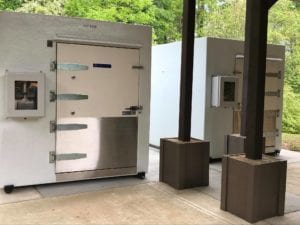
Where walk in pharmaceutical cold rooms excel
- Fast, direct access. With onsite cold rooms, products are close by and always within reach. Your team can go by as often as needed to pick up or drop off products. This makes walk ins especially useful for SKUs that move frequently in small quantities, products under quality review, or inventory involved in production or packaging workflows.
- Hands‑on control. Because storage happens in your own facility, your team maintains direct oversight of handling, staging, and organization. Fewer transfers also mean fewer opportunities for temperature excursions caused by unnecessary movement.
- A good fit for smaller inventories. Walk in cold rooms are often the simplest and most cost‑effective solution for companies with limited pallet counts or a focused product lineup. They provide reliable pharmaceutical cold storage without introducing the complexity of offsite logistics.
- Flexible, modular design. Modern walk in coolers and freezers can be configured for refrigerated or frozen temperature ranges and easily expanded over time by simply adding additional units, and you can opt for even more flexibility by renting units rather than purchasing. This modular approach allows your company to add capacity as inventory grows rather than investing heavily upfront for capacity you don’t yet need.
Where walk in cold rooms can fall short
- May be dependent on facility space. Indoor modular walk in cold rooms can be expanded over time, but growth is tied to the physical footprint of the facility. Outdoor standalone walk in coolers and freezers do not have this limitation.
- Added operational complexity. Onsite cold storage requires internal resources for monitoring, maintenance, documentation, and energy management. As volumes increase, these demands can start to distract from core pharmaceutical activities.
- Not ideal for large outbound volumes. When products begin shipping regularly in full truckload (FTL) quantities, walk in cold rooms may struggle to support efficient loading and outbound flow.
Offsite cold storage in pharmaceutical cold storage warehousing
Pharmaceutical cold storage warehouses are purpose‑built facilities run by 3rd-party logistics (3PL) providers designed to store temperature‑sensitive products at scale. These facilities specialize in handling palletized pharmaceutical inventory while maintaining consistent temperature control across large volumes.
With onsite cold rooms, your internal team is typically responsible for continuous temperature monitoring, alarm response, temperature excursion investigations, documentation, sensor calibration, and overall audit readiness. At a 3PL cold storage facility, providers usually assume responsibility for facility monitoring, calibrated systems, alarm management, and primary temperature records under defined service level agreements (SLAs). You will still retain quality oversight, but you should expect contractual visibility into temperature data, documented excursion response procedures, and clear audit rights when working with a 3PL.
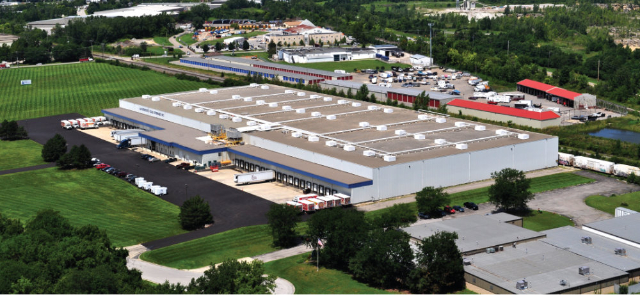
Where pharmaceutical cold storage warehouses shine
- Scalability without infrastructure investment. Offsite pharmaceutical storage facilities allow companies to increase capacity without adding square footage, building new cold rooms, or spending on additional technology.
- Designed for high pallet counts. Cold storage warehouses are optimized for palletized inventory, making them well suited for companies storing hundreds — or thousands — of pallets.
- More efficient shipping for large volumes. Pharmaceutical cold storage warehouses are equipped to move full truckloads of products in and out quickly, while simplifying staging and reducing truck turnaround time.
- Less internal complexity. By moving bulk inventory offsite, internal teams can focus less on compliance and day‑to‑day warehouse operations and more on manufacturing, packaging, and quality oversight.
Potential downsides to pharmaceutical storage in cold storage facilities
- No immediate access. Offsite storage is reliable, but because other companies also store products at the 3PL facility, storing or retrieving your products will require planning and coordination with the warehouse and transportation staff. Although some facilities allow same-day or expedited access, strict operating constraints and higher costs are typically imposed.
- May not make sense for small volumes. For organizations with limited inventory or infrequent shipments, pharmaceutical cold storage warehousing may add unnecessary costs and complications compared to onsite walk in cold rooms.
Walk in cold rooms vs. warehousing — which cold storage solution is better for pharmaceuticals?
Instead of thinking of these solutions as “better” or “worse” than the other, it’s more helpful to see them as tools for different stages of growth.
Walk in pharmaceutical cold rooms work best when inventory levels are easily manageable, products need frequent access, and storage is tightly integrated with onsite operations. Pharmaceutical cold storage warehouses become increasingly valuable as pallet counts grow and shipments become more predictable.
| Pharmaceutical walk-in cold rooms | Pharmaceutical cold storage warehousing |
|---|---|
| Fast, direct access | Scheduled access |
| Optimized for smaller inventories | Optimized for large inventories of 1-2 SKUs |
| Adds operational complexity | 3PL manages warehouse operations |
Many companies reach the tipping point when they are shipping one to two SKUs via full truckload (FTL) and storing hundreds of pallets onsite. At that stage, offsite pharmaceutical cold storage can have a significant impact on efficiency, while freeing up valuable onsite space for less popular SKUs.
For many larger-scale pharma operations, the best answer is both.
The most resilient pharmaceutical cold storage strategies combine both onsite and offsite solutions. Walk in pharmaceutical cold rooms provide speed and control. Pharmaceutical cold storage warehouses deliver scale and logistics efficiency.
By matching your products to the appropriate cold storage option based on SKU velocity, shipment size, and growth plans, companies can avoid unnecessary constraints while keeping their cold chain flexible.
Pharmaceutical cold storage decision checklist
Still not sure which option is right for your operation? Take this handy quiz to help clarify your pharma cold storage needs.
Answer the following workflow questions:
- Do you need immediate or same-hour access to temperature-controlled products?
- Are your products accessed frequently in small quantities rather than in full pallets?
- Do you manage products under quality review, quarantine, or release hold?
- Are cold-stored materials closely tied to manufacturing, packaging, kitting, or labeling workflows?
- Do you need direct, hands-on control over product handling and staging?
- Is your inventory size relatively small or moderate, but highly active?
- Would delays caused by scheduled cutoffs or transportation coordination disrupt operations?
- Do you value the ability to scale incrementally by adding or renting additional cold rooms rather than committing to large capacity upfront?
If you answered “yes” to most of these questions, the flexibility of onsite walk-in cold rooms will help meet your operational demand.
Now let’s take a look at your logistics:
- Do you store 1-2 temperature-sensitive SKUs with hundreds or thousands of pallets?
- Are outbound shipments planned, predictable, and typically full truckload (FTL)?
- Is your inventory primarily finished goods rather than work-in-process materials?
- Would moving your fastest-moving SKUs offsite free up valuable space in your facility?
- Do you want to reduce the internal burden of warehouse labor, monitoring, and maintenance?
- Would your process allow you to work within defined order cutoffs and retrieval timelines?
- Would you benefit from proximity to distribution hubs or transportation networks?
- Are you already managing inventory across multiple regions or markets?
If the majority of your answers are “yes”, then pharmaceutical cold storage warehousing may bring your operation efficiency and scale that onsite storage alone cannot.
Or maybe your answers fall across both categories:
- Do you have a combination of fast- and slow-moving SKUs?
- Would it help your operation to move fast-moving SKUs offsite so you could have more room for slower-moving inventory on site?
- Are some products accessed daily while others ship in waves?
- Do you need onsite cold storage for operational flexibility, but offsite cold storage for operational efficiency?
- Is onsite-only cold storage constraining your operation’s growth?
- Do you want to maintain control over critical inventory but outsource long-term or overflow storage?
If you answered yes to most of these questions, your pharmaceutical company may benefit from a hybrid strategy. This would allow your team to match your inventory to the best storage method for product velocity, shipment size, and operational risk.
Polar Leasing makes onsite pharma cold storage easy
Looking for reliability and flexibility for your onsite pharma cold storage? Polar Leasing’s got you covered. Our pre-validated pharmaceutical walk in cooler and freezer rentals provide thermal performance you can count on and make it easier to achieve compliance.
All of our cold rooms are factory-built standalone units that feature polyisocyanurate rigid board insulation covered in smooth, durable fiberglass. This ultra-efficient design allows you to spend less on energy, while expanding your storage capacity and preserving your valuable indoor space. Best of all, you can easily scale your capacity with a simple phone call.
Contact us today to find out how Polar Leasing’s cold storage solutions for pharmaceuticals can help your company improve efficiency fast.